
November 21, 2012 | Daily Monitoring Report.

US has decimated al Qaeda chiefs but must persist in fight -Panetta
21 Nov – Source: Reuters – 184 words
U.S. forces have decimated al Qaeda’s leadership and made gains against some of its affiliates, but the fight has shifted in new directions that will require persistent U.S. efforts to truly end the threat, Defense Secretary Leon Panetta said on Tuesday.
Panetta, in a speech to the Center for a New American Security, said while the United States had achieved progress against al Qaeda affiliates in Yemen and Somalia, associated groups had made inroads in Mali and Nigeria and were trying to gain a foothold in Libya.
He said the United States had “decimated core al Qaeda,” killing leaders like Osama bin Laden, Sheikh Saeed al-Masri and Abu Yahya al-Libi. It also has made strides against affiliated groups like al Qaeda in the Arabian Peninsula in Yemen and al Shabaab in Somalia, he said.
“These gains are real, but it is important to point out that even with these gains, the threat from al Qaeda has not been eliminated,” he said. “We have slowed the primary cancer, but we know that the cancer has metastasized to other parts of the global body.”
Key Headlines
- Gov’t forces threaten to attack Bur-hakaba (Radio Bar-kulan)
- Somali ambassador: Police stations to be open in Eastleigh (Shabelle)
- Kenya Ethiopia agree on regional security cooperation (Walta Information Centre/ Xinhua)
- Puntland to investigate killing of elder in Galkayo (Bar-kulan/Garowe Online/Radio Mogadishu/SONNA)
- US has decimated al Qaeda chiefs but must persist in fight -Panetta (Reuters)
- Puntland forces arrest 3 pirates (Shabelle)
SOMALI MEDIA
Gov’t forces threaten to attack Bur-hakaba
21 Nov – Source: Radio Bar-kulan – 151 words
Somali forces in Bay region have threatened to attack rebel-held town of Bur-hakaba in an effort to dislodge militants from the region. Speaking to Bar-kulan, Bur-Hakaba’s district commissioner-designate Ahmed Mohamed Yussuf said government and AU forces are now working on plans to oust the rebel group from the area.
He said government troops dispatched from Yaq-Bari in Lower Shabelle are now heading towards the town in order to remove militant fighters from the area. Yussuf added that plans were also underway to clear militants from areas along the road between Baidoa and Bur-hakaba to ease movement of people and goods between these towns.
Elsewhere, government officials in Bay region have called for government support to meet their financial needs. Area governor Abdifatah Mohamed Ibrahim was quoted as saying that his administration is facing financial crisis and asked the central government to support them in paying the salary of their forces.
Somali ambassador: Police stations to be open in Eastleigh
21 Nov – Source: Shabelle – 130 words
Somali ambassador in Kenya Mohamed Ali Nur says police stations will be opened in the Eastleigh neighbourhood of Kenya’s capital, where streets battles between Kenyans and Somalis have raged on for the past two days.
“I requested the Kenyan government officials to open police stations in the Somali dominated Eastleigh neighbourhood, to stop the repeated attacks against ethnic Somalis,” the ambassador said, while calling on Somalis to work with the police to tighten the security and protect their life and properties.
Somalis make up the majority of Eastleigh’s inhabitants and they own business in the area. The neighbourhood was the scene of a deadly attack whereby Kenyan youths on Monday battled Somali communities, following an attack on a bus that left 9 people killed and 30 others injured.
Puntland to investigate killing of elder in Galkayo
21 Nov – Source: Bar-kulan/Garowe Online/Radio Mogadishu/SONNA – 100 words
Puntland has promised to investigate the Monday killing of an elder in central Somali town of Galkayo, Mudug governor has told Bar-kulan. Gunmen armed with pistols have killed Adan Farah Dhere who is also a businessman and injured another seriously at Garsor village in Galka’o city of Mudug region under control of Puntland last night. The elder was from a mosque and heading to his home when the armed men shot him several times, killing him.
Puntland’s Mudug governor, Mohamed Yussuf Jamaa blamed an unspecified group for being behind the assassination of the elder. He appealed to the locals in the region to help them apprehend and bring the assailants to justice.
Puntland forces arrest 3 pirates
21 Nov – Source: Shabelle – 91 words
Authorities in Somalia’s semi-autonomous region of Puntland say they have arrested at least three pirates during an operations in Eyl located in the coastal region of Nugal.
A Puntland official said government forces are continuing with robust anti-piracy security operations in the coastal areas, where suspected criminals and pirate gangs have turned into safe havens and are holding more ships and crew members as hostages for months and years.
“Puntland forces have detained three pirates, with their weapons and other materials in the crackdown and were taken into custody for inquiry regarding the case,” the official said.
SOLJA Name’s a Seven Man Committee to Advise the President on the Issues Pertaining the National Security Act
20 Nov – Source: Somaliland Press – 87 words
Somaliland Journalist Association (SOLJA) has today named a seven member committee to negotiate with the current KULMIYE government on issues pertaining the controversial National security Act (No: 59/2012) during a meeting which was attended by members of the media fraternity which was held at the Imperial Hotel, Hargeisa.
The National Security Act(No: 59/2012) has become a point of contention lately due to the nature of far ranging powers accorded which many deem as unconstitutional especially when it comes to the infringement of media rights .
REGIONAL MEDIA
Kenya, Ethiopia agree on regional security cooperation
20 Nov – Source: Walta Information Centre/ Xinhua – 533 words
Kenya and Ethiopia on Monday agreed to work closely in order to promote peace and security in the region. Ministry of Foreign Affairs Permanent Secretary Thuita Mwangi told journalists in Nairobi that both nations will jointly explore ways of building on the progress realized between Sudan and South Sudan following the signing of various agreements.
“Kenya and Ethiopia have agreed to accelerate efforts aimed at searching for peace and stability in the Horn of Africa region, including consolidating the gains in Somalia,” he said during the opening session of the technical meeting of the 34th Kenya- Ethiopia Joint Ministerial Commission (JMC) in Nairobi.
Somali President condemns grenade attack in Kenya
20 Nov – Source: Africa Review – 151 words
Somali President Hassan Sheikh Mohamud has condemned the horrific grenade attack on a public service bus in Nairobi’s Eastleigh estate. In a press statement, the President sent his condolences to the victims and families of the attack that resulted in the death of at least 10 and wounded more than 30.
President Mohamud stated: “Terrorism, is the most timid, and inhumane activity against innocent civilian.” He highlighted the sacrifices that Kenyan forces made and continued to make to restore peace and stability inside Somalia and noted such terrorist attacks would not weaken the spirit of the Kenyan people and the relations between the two neighbouring states.
President Mohamud also underlined that the people and the Government of Somalia were in solidarity with their Kenyan neighbours at this moment of national grief. “Certainly,” he said, ”resorting to such brutal terrorist action will in no way hold back the people of Kenya.”
INTERNATIONAL MEDIA
US has decimated al Qaeda chiefs but must persist in fight -Panetta
21 Nov – Source: Reuters – 184 words
U.S. forces have decimated al Qaeda’s leadership and made gains against some of its affiliates, but the fight has shifted in new directions that will require persistent U.S. efforts to truly end the threat, Defense Secretary Leon Panetta said on Tuesday.
Panetta, in a speech to the Center for a New American Security, said while the United States had achieved progress against al Qaeda affiliates in Yemen and Somalia, associated groups had made inroads in Mali and Nigeria and were trying to gain a foothold in Libya.
He said the United States had “decimated core al Qaeda,” killing leaders like Osama bin Laden, Sheikh Saeed al-Masri and Abu Yahya al-Libi. It also has made strides against affiliated groups like al Qaeda in the Arabian Peninsula in Yemen and al Shabaab in Somalia, he said.
“These gains are real, but it is important to point out that even with these gains, the threat from al Qaeda has not been eliminated,” he said. “We have slowed the primary cancer, but we know that the cancer has metastasized to other parts of the global body.”
Somalia piracy hits monsoon forecast
21 Nov – Source: Deccan Chronicle – 215 words
Indian monsoon forecasting is facing a major problem due to the alarming presence of Somalia pirates in the Indian Ocean. Hyderabad-based Dr M. Ravichandran, a senior scientist with the Indian National Centre for Ocean Information Services pointed out that since the western Indian Ocean is a piracy notified area, “we are not in a position to conduct crucial experiments in that zone”.
“The result is that while the world scientific community can get weather data from the Bay of Bengal, the eastern equatorial and central Indian Ocean, it does not have access to the western Indian Ocean along the African Coast,” Dr Ravichandran said.
This lack of access to data has adversely impacted information availability on the Indian, African and the Australian monsoons. Dr Ravichandran reveals that they have approached the Indian navy to provide protection to scientific vessels plying these trouble waters but talks have not made much headway.
The experiment titled Research Moored Buoy Array (RMBA) involves placing huge “buoys” into an ocean at the depth of 500 metres in order to study the temperature, salinity and other conditions found at those depths. Large vessels are required to ply these buoys which is not possible given the frequency of pirate attacks. In 2012, Somalia pirates have attacked 99 ships plying in these waters.
Kenya: Garissa residents shot after army launches crackdown
20 Nov – Source: BBC – 112 words
At least eight people have been shot and more than 50 wounded in an army crackdown in the north-eastern Kenyan town of Garissa, officials say.
A student told the BBC soldiers had shot at pupils waiting to go into an exam at a school near a military base. It was the second day of violence after the killing of three soldiers by gunmen in town that borders Somalia, where Islamist militants are based.
Reporters say scores of troops beat and detained residents. Kenyan Defence Minister Mohammed Yusuf Haji has told the BBC he did not authorise the army action in Garissa, which is about 350km (215 miles) northeast of the capital Nairobi.
SOCIAL MEDIA
CULTURE / OPINION / EDITORIAL / ANALYSIS / BLOGS/ DISCUSSION BOARDS
“If Somalia needs to stand on its own and lessen its dependence on international donors, then developing geo-resources quickly is an option that generates some income for the state to move forward and obtain some degree of self-reliance.”
Geo-resources as revenue generator for the new Somali Government
20 Nov – Source: Hiiraan Online – 1257 Words
Somalia is moving slowly and steadily towards political stability and security. For some this pace is clear to notice and for many the pace is difficult to visualise. However, there is a degree of development and movement towards this end. The road map plan steered Somalia into the right place, making it possible for the war-ravaged country to stand on the brink of a bright new future. A time for a fresh start has come as some of the milestones in the road map were achieved. In addition
The time has come that Somalia frees itself from international donation and UN hand-outs. The Ministry of Resources has to take a lead in this effort. Some minerals need relatively long time to survey, explore and produce, while the country has some minerals that are really ready and need lesser resources to explore, develop, produce and export.
The country possesses a wealth of energy and mineral resources. These resources are undeveloped and the list includes coal, gas, oil, metallic minerals, precious metals, precious and semi-precious gemstones and construction and industrial minerals.
Natural resource (geo-resources) development could potentially provide the vehicle to revive the Somali economy, strengthen the state, generate revenue, provide jobs, deviate huge manpower away from piracy, fundamentalism and anti-law activities and improve in the general adherence to law and order.
“Asmara should pursue a political dialogue on issues of common interest and on issues of concern to both parties. At the same time, it should be noted that the basic idea of helping resolve the Ethiopia-Eritrea conflict peacefully would be helpful for Somalia and the Horn of Africa. We Somalis and Eritreans, have so many things in common. What unite us are bonds of common history, the same political challenges, similar social and cultural background and the same aspirations.”
Eritrea and Somalia: the past and the future
21 Nov – Source: African Thinker Blog – 424 Words
Having met so many people from the Horn of Africa nation of Eritrea,a country that has so much lessons to contribute to rebuilding Somalia. Eritrea’s heroic and unique independence struggle was one the foremost things that surprised me about this country. In 2012 Eritreans celebrated there 21 anniversary of the independence,which was won after heavy sacrifices and after a fierce and longstanding war of liberation which lasted 30 years.
Against all odds, because the challenges were insurmountable, notably if you put into consideration the international legality represented in UN resolutions and the organisation of African Unity charter which made the dream of the Eritrean independence almost impossible.
As I was writing this post, I was also having a chat with my Hooyo (mother)about Eritrea and she told me should used to always see the Eritrean community in Mogadishu’s Hodan district in the 1980’s,with whom she used to exchange views on the continued independence struggle back in Eritrea.
“Growing up in Canada, I never felt like I belonged since I was not a product of parents with ocean blue eyes and Barbie blond hair. I was a visible minority. So, when my father brought me to Kenya for the first time at the age of 10, I felt what home was supposed to mean. I belonged. I was a Somali Kenyan and proud. Eleven years later, how could I explain to myself that my home was responsible for killing my cousins, raping my aunts and arresting my uncles? My heart was broken.”
The Politics of Belonging
20 Nov – Source: Africa On Blog – 1288 Words
Last year around this time, I was anticipating my trip to Nairobi, Kenya. It was my first time heading back since 2008 and I was looking forward to seeing all the changes Kenya had undergone since my last visit. I could not wait to be greeted by the warmth, palm trees, roundabouts, and the feeling of belonging, which I missed dearly. I was beyond ecstatic. I was heading home.
The flight journey was peaceful. There was the traditional, yet terrible excuse of meals provided by the airline along with an abundance of films, which included my favourite, Lion King. Yet, I was lost in my thoughts, wondering if the scents or sounds of the nation had changed drastically to the point of being unrecognisable. It was the nostalgic feeling of meeting an old friend again. “Karibu.
Welcome to Nairobi,” the flight attendant said. But as my father and I, with our belongings in tow, proceeded towards the exit of the plane, I remember feeling something was a bit unusual about this trip. Instead of the expected warm and welcoming smiles, hostile, fear-ridden faces confronted us. Not to sound dramatic, but the change of reaction was so drastic and cold I remember feeling like I had the scarlet letter drawn across my face.
“What is the reason for your trip to Nairobi?” asked the grumpy customs officer. “To merely vacation and visit family,” I replied, while looking at my father who seemed taken aback by her attitude. “How long are you staying here?” she impatiently asked. “About three weeks”, my father interjected.
He was exhausted by the long flight and had no patience for the bad-mannered customs officer. The whispers from airport employees and locals seemed endless and the prolonged inspection of our passports confirmed the suspicion and hostility we felt. “Somalis or Canadians?” was the frequent revisited question. It was clear from the questioning that being Somalia as well as Canadian made me an “other” among the Kenyans. I was made to feel like an outsider among my own people.
Top tweets
@amisomsomalia Universal children’s day celebrations held in #Mogadishu,#Somalia. Theme: “Stop violence against Children”. http://bit.ly/Qu71aV.
@OCHASom Girls & women forced to leave their homes face another ordeal once they arrive at the camps http://uni.cf/SdB0AV @unicefsomalia @UNHCRSom.
@AbukarArman Brutal execution of Kenyan soldiers as well as military’s excessive force on #Somali civilians exacerbate volatility! http://www.bbc.co.uk/news/
@Tarey_A #Somali: Some terms that need op-clarification: Somali = ethnic identity. Somalia = a country of mostly Somali. Somalian: meaningless term.
@UNIC_Moscow #African_Union police help bring law and order to #Somalia The African Union Mission in Somalia (#AMISOM) http://bit.ly/Ueyrib.
Image of the day
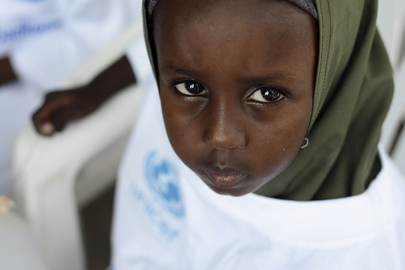 Portrait of a child from a camp for internally displaced persons (IDPs) near the African Union Mission in Somalia (AMISOM) base in Mogadishu. Children from the camp were brought together by the Somali Women Development Center to celebrate Universal Children’s Day, held 20 November. Photo: UN.